Analysis of “Hail to the King”

The Song “Hail to the King” by the band Avenged Sevenfold was produced by Mike Elizondo for the bands sixth album (of the same name) that was released on July 15, 2013. I like this song quite a bit because it never fails to get me pumped up and excited to do something like going on a run or working out at the gym. In this blog post I’m going to discuss five musical elements of this song: lyrics, timbre, texture, meter, and tempo.

Lyrics:

https://genius.com/Avenged-sevenfold-hail-to-the-king-lyrics

The first musical element that we’ll discuss is the lyrics which you can find in the link above. To me the lyrics in this song told a simple story about a society that is under the rule of a tyrant and how they suffer that oppression but still need to show respect to their ruler. After doing some research however, I found out that the band’s singer once told Kerrang! magazine in an interview that “‘Hail To The King’ is a question about how society sees itself. From day one, people have elected kings and leaders, people have followed presidents, and they cry over who the new pope is. Sometimes you’ve got to step back and say, ‘What are we doing here? Why do we need all of these people to tell us how to run our lives?’. I find that I actually like this song a lot more now knowing that the song is about thinking for yourself and standing up for what you believe in.

Timbre:

Timbre is defined the term used to mean the feel, sound quality, or vibe of a song. It seems to me that the timbre in “Hail to the King” is an exciting outcry that feels like it calls people who listen to take action for what they believe in. Avenged Sevenfold puts a great deal of importance in timbre, in their interview with Kerrang! magazine their singer said “We tend to come in and talk about the vibe we want for the song, more than coming up with riffs. Then we build around that vibe, writing riffs that work with that. We try not to waste too much time on things that don’t work. As soon as something takes us out of the vibe we’re creating, we throw it out.” when asked about how they write songs.

Texture:

The term texture, when used in music, is used to describe what different parts (melody,harmony, etc…) a song has and how they fit together. Like most rock music, “Hail to the King” has a homophonic texture; meaning there is only one melody at a time (sometimes vocals and sometimes guitar solos in this case) that is supported by background parts (instruments here though sometimes the guitar takes the lead).

Meter:

A song’s meter is the way beats are organised in the music. “Hail to the King” uses what is referred to as “common time” which has a structure of 4 quarter notes to each measure. This means that though a measure might include several different types of notes, they must be equivalent in length to 4 quarter notes. Common time is incredibly popular in western music today and if you pay attention to other songs you listen to then you will find that many of them also follow this pattern.

Tempo:

The tempo of a song is the speed of the beats; it is often tracked in beats per minute or bpm for short. The tempo in “Hail to the King” might seem to be very fast if you listen to some of the background guitar parts, but if you pay attention to the drums especially you will see that while some parts might be playing many notes per beat the overall tempo is a consistent 118 bpm throughout the song.

Sources:

“Avenged Sevenfold – Hail to the King.” Genius, Genius Media Group Inc., 23 Aug. 2013, genius.com/Avenged-sevenfold-hail-to-the-king-lyrics.
“Hail to the King (Avenged Sevenfold Album).” Wikipedia, Wikimedia Foundation, 19 Nov. 2018, en.wikipedia.org/wiki/Hail_to_the_King_(Avenged_Sevenfold_album).
“Hail to the King (Song).” Wikipedia, Wikimedia Foundation, 22 Nov. 2018, en.wikipedia.org/wiki/Hail_to_the_King_(song).
LLC, Blendist. “BPM for Avenged Sevenfold – Hail to the King on Songbpm.” SONG BPM, songbpm.com/hail-to-the-king.
Maria_Pro. “The Story Behind ‘Hail to the King’ by Avenged Sevenfold.” Ultimate Guitar.com, Ultimate Guitar, 6 Nov. 2017, 08:26 PM, www.ultimate-guitar.com/articles/features/the_story_behind_hail_to_the_king_by_avenged_sevenfold-68813.


Music and the Fictive Dream: The story of “Friend Like Me” from Aladdin

Background

The Song “Friend Like Me” by composer Alan Menken and lyricist Howard Ashman was created for the movie Aladdin which was released in 1992 and would go on to be one of the many great classic Disney movies to come out around that time. According to an interview composer Alan Menken conducted with entertainment weekly when they created the song they didn’t know who was going to play genie but they were hoping for it to sound like a Fats Waller style from the 40’s. Luckily when Robin Williams was casted for the role he turned out to be easily able to replicate the style; Menken said “He was amazing… He took ahold of the creative process, both on that and ‘Prince Ali’ especially.” “Friend Like Me” takes place in a pivotal part of Aladdin’s story when Aladdin first finds Genie’s lamp; the purpose of the song is for Genie to explain what exactly he can do and how Aladdin will benefit from having him as a friend and ally.

Lyrics

https://genius.com/Robin-williams-friend-like-me-lyrics

The lyrics for “Friend Like Me are really cool because they read almost like a normal conversation;  you may not know they were song lyrics if you read them on their own. Within the lyrics there is actually very little repetition and you can very clearly understand what genie is saying: that Aladdin is lucky because he can grant three wishes no matter what they are. I think that the reason for this writing and Robin William’s careful pronunciation of the lyrics is that this song plays a crucial role in telling the story because without being able to follow along with the song people would have a hard time figuring out Genie’s importance.

Meter

The song holds a pretty consistent 4/4 time signature throughout. This isn’t really that surprising since 4/4 is considered “common time” and is utilised heavily throughout western music. I think that it was a good choice here.

Timbre

The song has a very smooth, upbeat, and jazzy feel throughout. This makes sense because the characters are celebrating their meeting and the style that the composer claims they were trying to mimic, that of Fats Waller, comes from a jazz musician in the 1940’s. I like the timbre because it is memorable, and gives the song a distinct feel.

Opinion

Of the many great songs from Disney movies, “Friend Like Me” is definitely one of my favorites. I really like this song because it has a memorable sound, It tells an important part of the story, and it sends a good message. I think that “Friend Like Me” sends a really positive message to society that just like in the movie, sometimes a good friend is all the power you need to get through a bad situation. Due to all these reasons this song is always able to put a smile on my face; and for that alone I love it.

Works Cited

“Aladdin (1992 Disney Film).” Wikipedia, Wikimedia Foundation, 17 Nov. 2018, en.wikipedia.org/wiki/Aladdin_(1992_Disney_film).
“Aladdin (Soundtrack).” Wikipedia, Wikimedia Foundation, 1 Nov. 2018, en.wikipedia.org/wiki/Aladdin_(soundtrack).
“Fats Waller.” Wikipedia, Wikimedia Foundation, 21 Nov. 2018, en.wikipedia.org/wiki/Fats_Waller.
“Friend Like Me.” Wikipedia, Wikimedia Foundation, 15 Nov. 2018, en.wikipedia.org/wiki/Friend_Like_Me.
Menken, Alan, et al. “Robin Williams ‘Friend Like Me’ Sheet Music in D Minor (Transposable) – Download & Print.” Musicnotes.com Blog,
“Robin Williams – Friend Like Me.” Genius, Genius Media Group Inc., 31 Oct. 1992, genius.com/Robin-williams-friend-like-me-lyrics.
Snetiker, Mark. “Alan Menken Tells Stories behind 7 Classic Disney Songs.” EW.com, EW.com, 22 Jan. 2015, 12:00 Pm, ew.com/article/2015/01/22/alan-menken-disney-songs/.

The Role of the Performer: Frank Sinatra

      Performers play a crucial role in the way we understand music. While performers may not write the music that they perform it is only through them that the music truly comes to life. Words have meaning, songs have melody and rhythm; but it is in the way that these different parts are interpreted and performed that gives music its soul and allows it to inspire emotion in those who hear it. To understand how the role of a performer can effect music we’ll be examining the life and music of one of the greatest performers of all time: Frank Sinatra.

History:

Francis Albert Sinatra was born in Hoboken, New Jersey on December 12,1915 the son of two Sicilian immigrants. Sinatra had always been interested in music but it wasn’t until he saw Bing Crosby perform that he realized he wanted to sing for real. After singing small time for a bit Sinatra made his first group of successes singing with the bands of Harry James, and later Tommy Dorsey. Sinatra went on to achieve a wildly successful solo career in both music and acting, earning such nicknames like “The Sultan of Swoon”. Unfortunately Sinatra’s career suffered a slump in the early 1950’s, but it was quickly revived by his award-winning performance in the film “From Here to Eternity”. Frank Sinatra went on to have a very successful career, eventually founding his own record label (reprise) and film studio (Artanis). Frank Sinatra was married four times over the course of his life to Nancy Barbato (1939-1951), Ava Gardner (1951-1957), Mia Farrow (1966-1968), and Barbara Marx(1976-1998 when he died); he had three children with his first wife named Nancy, Frank Sinatra Jr., and Tina.

Music:

Though Frank Sinatra achieved a very successful film career, it is his for his music that he is most remembered today. Sinatra never learned to read music, but many people who worked with him said that he had a natural instinct for how music worked. Sinatra’s voice has a distinctive smooth and sensual timbre and Nelson Riddle (a well-known arranger who often worked with Sinatra) once said “His voice has a very strident, insistent sound in the top register, a smooth lyrical sound in the middle register, and a very tender sound in the low. His voice is built on infinite taste, with an overall inflection of sex. He points everything he does from a sexual standpoint.” With this in mind, it’s not surprising that many of Frank Sinatra’s songs are about love.

https://youtu.be/5hxibHJOE5E

This song is a love song called “Fly Me to the Moon”, it was written by Bart Howard in 1954, and was arranged by Quincy Jones for a recording of Frank Sinatra accompanied by Count Basie. You can easily hear Sinatra’s distinctive, sensual, tone on full display in this love song. While the lyrics and melody are beautifully written, it is Sinatra’s performance that seals the emotion and message of the song.

This song is called “My Way”, the lyrics were written by Paul Anka in 1969 but it was set to the music of a French song called “Comme d’habitude” that was co-composed and co-written with Jacques Revaux in 1967. Unlike the previous song My Way” is not a love song; instead the lyrics talk of how doing things your own way and taking pride in the decisions you make is important, even if you regret them later. Again while the lyrics have a strong message behind them I believe that it is Sinatra’s insistent, honest tone along with his masterful command of the tempo and dynamics building up to a crescendo and then falling back down again that truly make this song something special.

There is art in writing:whether it is in music, poetry, or lyrics; but it is in the performance that these different facets truly culminate into something special. All the parts may be great, but it takes a great performer presenting them for the art to become something unforgettable. I believe that it is the role of the performer to see something in the music and explain it to their audience through their performance, and few people in history can fulfill this role as well as Frank Sinatra.

Works Cited:

“Fly Me to the Moon.” Wikipedia, Wikimedia Foundation, 14 Oct. 2018, en.wikipedia.org/wiki/Fly_Me_to_the_Moon#Other_releases.
“Frank Sinatra.” Biography.com, A&E Networks Television, 28 Apr. 2017, www.biography.com/people/frank-sinatra-9484810.
“Frank Sinatra.” Wikipedia, Wikimedia Foundation, 29 Oct. 2018, en.wikipedia.org/wiki/Frank_Sinatra#Artistry.
“My Way.” Wikipedia, Wikimedia Foundation, 6 Nov. 2018, en.wikipedia.org/wiki/My_Way.
“Nelson Riddle.” Wikipedia, Wikimedia Foundation, 8 Nov. 2018, en.wikipedia.org/wiki/Nelson_Riddle.

A Musical Trip Into The Sounds Of Traditional Japanese Theater

Theater is an important part of Japanese culture and art. Japanese theater takes many forms, but the three major traditional kinds are Kabuki, Noh, and Bunraku. While the three forms vary greatly in the types of performances that they give all three of these types of theater often have musical accompaniment. In this blog post we’ll be exploring what these three forms of theater are and what makes the music that goes along with them so unique.

The first of the three theater types that we will discuss is known as Kabuki. Kabuki is generally considered to be the most popular of the three forms of theater today, it originated in Japan’s Edo period (1603-1868). Kabuki theater was originally performed by women, however after the Tokugawa Shogunate banned women from participating the roles were exclusively performed by men (even the female roles). Kabuki theater usually features elaborate costumes, over dramatized stories, and exciting music.

Here is an example of kabuki theater music, the primary instrument is Shamisen which is an instrument similar to a guitar or lute that has only three strings. The song featured is called Echigojishi.

https://youtu.be/du2TRSjgr-U

The Shamisen tends to have a flowing twangy timbre that always seems to bring images of a flowing stream to my mind.

The second form of traditional Japanese theater that we are going to discuss is called Noh theater. Noh theater is much slower and more structured both in movement and style than Kabuki theater, it features male actors telling stories from history or legend that often have a supernatural theme. The reason for Noh theater’s strict structure comes from it being named the official ceremonial art of the Tokugawa Shogunate and therefore was strictly regulated by the government of the time. Noh performers often wear masks, and go hand in hand with shorter comedy acts in the in the intermissions called Kyogen. The musicians in a Noh play are called Hayashi, and always include four people playing the fue flute, kotsuzumi shoulder drum, otsuzumi hip drum, and taiko stick drum respectively. The fue flute has a distinctive airy and mysterious sound that you may have heard in the background of the kabuki music piece, while the drums have different pitches and are played with a steady rhythm.

Here is an example of a traditional Japanese Noh theater performance, unfortunately the identity of the play and performing group were not provided. If you pay close attention you can spot the Hayashi playing their instruments in the back.

The final of the three traditional Japanese theater types is Bunraku theater. Bunraku theater is very different from the other two forms of theater because it is performed with puppets. Unlike the western image of puppets however, the puppets of Bunraku theater have no strings, and their puppeteer are in clear view of the audience (though they dress all in black to show that they should be overlooked. Bunraku puppets are incredibly elaborate and are often capable of complex movements and expressions. The puppets are accompanied by a chanter/singer called the Tayu who tells the story and a shamisen player (the same instrument that takes the lead in Kabuki music) who plays in harmony with the Tayu.

Here is an example of a Bunraku performance, the video is actually a pretty informative video about Bunraku theater from UNESCO: the United Nations Educational, Scientific, and Cultural Organization It contains several good examples of Bunraku theater and there is a great view of a Tayu and a shamisen player at about the 18 second mark.

I think that it’s fascinating how the three different forms of theater can be so completely different, and even have different feeling music even though roughly the same instruments are used in all of them. I do however think that the musical portions of traditional Japanese theater have a distinct timbre that acts as a kind of musical signature which makes the music of traditional Japanese theater easy to identify. For me that signature is the mysterious and supernatural feel that is carried by the shamisen and especially by the fue flute; while many cultures utilize drums similar to those used here, the fue and shamisen are so distinct and different from anything that I’ve ever heard before that they are instantly recognizable.

Sources:

“Bunraku.” Japan-Guide.com, www.japan-guide.com/e/e2092.html.
“Bunraku.” Wikipedia, Wikimedia Foundation, 11 Oct. 2018, en.wikipedia.org/wiki/Bunraku.
“Japan History.” Far Side Music, www.farsidemusic.com/acatalog/History.html#pre_meiji.
“Kabuki.” Japan-Guide.com, www.japan-guide.com/e/e2090.html.
“Kabuki.” Wikipedia, Wikimedia Foundation, 22 Oct. 2018, en.wikipedia.org/wiki/Kabuki#Performance.
“Noh.” Wikipedia, Wikimedia Foundation, 16 Oct. 2018, en.wikipedia.org/wiki/Noh#Roles.
“Noh Theater.” Japan-Guide.com, www.japan-guide.com/e/e2091.html.
“Traditional Music.” Japan-Guide.com, www.japan-guide.com/e/e2113.html.

The Evolution Of The Electric Guitar

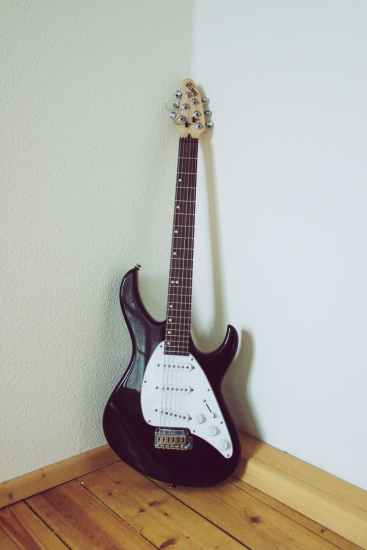
The guitar is a fascinating instrument that has captured the hearts and minds of those who hear it ever since instruments of its like were first created back in the 12th century (though they weren’t called guitars back then). There are many different types of guitars, but one of the most popular today is the electric guitar. Electric guitars are interesting because not only are they very different in both design and sound to previous, more traditional, guitars; they are also a relatively recent development in music.

Before electric guitars were created, the most common form of guitar was the acoustic guitar. Acoustic guitars feature a hollow body that acts as an amplifier for the instrument, taking the sound from the strings and making it louder from the resonance in the body. While electric guitars often are the first type of guitar that comes to mind nowadays, acoustic guitars are very much still in use. Here is an example of classical acoustic guitar music: the song “Malaguena”  by the Cuban composer Ernesto Lecuona in 1933, performed by Michael Lucarelli.

Today, Electric guitars are primarily loved for their signature sound; but the original goal when creating them was actually to make the more traditional acoustic guitar louder. As concerts grew in size, musicians simply needed louder instruments in order to be heard. In the 19th century guitar makers began to use steel strings for their guitars in order to increase the volume of the instruments, but as the demand for even louder guitars grew it was realized that a different method was needed.

The technology called a pickup that would one-day form the basis for the modern electric guitar was invented on November 19th, 1924 by Lloyd Loar who realized that you could use a magnet to transfer the vibrations from guitar strings into electrical systems. In 1931, when a pickup was attached to an aluminium guitar that was termed “The Frying Pan”  what is today considered the first electric guitar was created. Early electric guitar designs attempted to attach pickups to current acoustic designs, but the vibrations created in the hollow body of the instrument caused a feedback with the vibrations from the strings of the instrument that muddled the sound. With this discovery they realized that when looking to make an electric guitar a solid body was actually better because it removed the feedback (consequently, with a solid body guitar shape doesn’t matter leading to the many flamboyant designs often seen in rock and roll).

festival music rock sound
Photo by Markus Spiske temporausch.com on Pexels.com

While created for its volume, people soon came to love the electric guitars signature sound.  Electric guitars have different musical properties than their more traditional counterparts and are capable of different techniques. While acoustic guitars have a warmer more resonant timbre, electric guitars are often loved for their crisp and clear sound. Another musical difference between the two instruments is that electric guitars are capable of achieving far larger downward leaps between notes (going from one note to a lower note) with a technique known as “dive bombing” to force the lowest note of an electric guitar even lower. The electric guitar was initially embraced by country, blues, and jazz musicians but it was in the 1950’s when rock and roll came around that the electric guitar truly found its home and never looked back. Here is an example of an electronic guitar solo from the youtube channel Bab V.

Personally, I think both the classical acoustic guitar and the electric guitar have great sound qualities to them. I love the classical acoustic guitar when I want to listen to something relaxing, but I much prefer the sound of the electric guitar when I want to listen to something more energetic. When I was a kid I actually used to play the classical acoustic guitar and I wish I had stuck with it; in fact to this day, while I overall prefer listening to the electric guitar more I think that the music of the classical acoustic guitar sounds more fun to play.

Sources:

“Electric Guitar.” Wikipedia, Wikimedia Foundation, 10 Oct. 2018, en.wikipedia.org/wiki/Electric_guitar#Sound_and_effects.
“Frying Pan (Guitar).” Wikipedia, Wikimedia Foundation, 26 Sept. 2018, en.wikipedia.org/wiki/Frying_pan_(guitar)#Development.
“Guitar.” Wikipedia, Wikimedia Foundation, 20 Sept. 2018, en.wikipedia.org/wiki/Guitar#Acoustic.
“History of the Electric Guitar.” History Of The Electric Guitar Timeline | Preceden, http://www.preceden.com/timelines/35038-history-of-the-electric-guitar.
“The Invention of the Electric Guitar.” Lemelson Center for the Study of Invention and Innovation, Smithsonian, 22 Apr. 2016, invention.si.edu/invention-electric-guitar.

Analysis of “Everlong”

The song “Everlong” by the foo fighters was written by Dave Grohl and produced by Gil Norton.“Everlong” was the second single released as part of the foo fighters’ album “The Colour and the Shape”; it peaked at 3rd place on the US Alternative Songs billboard in 1997 and went on to achieve a double platinum certification in the US. The song was written during the break-up Grohl’s first marriage. I like this song because the lyrics are touching, and when I listen to it while I’m sad it gives me hope that things will eventually get better. In this blog post I’m going to discuss five musical elements of this song: lyrics, timbre, texture, meter, and tempo.

Lyrics:

(Like in my previous post, I’m including a link to the lyrics below in order to avoid cluttering the post.)

https://genius.com/Foo-fighters-everlong-lyrics

The first musical element that we’ll discuss is the lyrics and the story they tell. To me, the lyrics in this song clearly tell a story of being in love and hoping that the moment will never end. This is corroberated by the song writer Dave Grohl himself who once said  “That song’s about a that I’d fallen in love with and it was basically about being connected to someone so much, that not only do you love them physically and spiritually, but when you sing along with them you harmonize perfectly.”

Timbre:

A song’s timbre is the quality or characteristic of a piece of music’s sound. I personally think that this song’s sound has a rolling feel that continues the same for the entire song. I think that this consistency is especially important because the song is about wishing for a single moment and feeling to last forever.

Texture:

A piece of music’s texture is how many different parts (melody, harmony, etc.) the music has and how they fit together. For example, “Everlong” has a clearly homophonic texture where there is a single melody (the vocals in this case) supported by a background harmony (heard here as the instruments). Homophonic texture is often used in rock music.

Meter:

In music, meter is the term used to describe how beats are organised in a song. After listening to the song and referencing some online sources it is clear that “Everlong”uses 4/4 time. This time signature appears often in music today, so much so in fact that it has earned the nickname “common time”.

Tempo:

A song’s tempo is the speed of the beats in a song, it is oftem tracked in beats per minute or bpm for short. When looking online there appears to be a little bit of variation in what tempo people think this song has (between 152bpm and 158bpm) but 158bpm seems to be the most common answer. The tempo, just like the other elements of this song, appears to remain consistent throughout the song.

Sources:

“Everlong.” Wikipedia, Wikimedia Foundation, 19 Aug. 2018,en.wikipedia.org/wiki/Everlong#Charts_and_certifications.
“Foo Fighters – Everlong.” Genius, 18 Aug. 1997, genius.com/Foo-fighters-everlong-lyrics.
LLC, Blendist. “BPM for Foo Fighters – Everlong on Songbpm.” SONG BPM, songbpm.com/fighters-everlong.

Analysis of “Uprising”

The song “Uprising” by the English band Muse was written by Matt Bellamy, produced by the band as a whole, and mixed by Spike Stent. It was released as part of the band’s album “The Resistance” on September 7, 2009. The song went on to do very well commercially, even attaining a double platinum in the US (over 2,000,000 copies sold).

I’m a big fan of this song because it fits a lot of different moods for me; I can listen to it when I’m happy, sad, or even when I just want to get pumped up for something. In this post we are going to look at and discuss three musical elements of this song: lyrics, timbre, and meter.

Lyrics:

(I’ve put a link to the song’s lyrics below to avoid cluttering the post)

https://genius.com/Muse-uprising-lyrics

The first element that we’re going to discuss is the lyrics of the song and what message they are trying to send. If taken literally, the song’s lyrics along with its title Uprising clearly depict a story of rising up against an oppressive government. I personally think that the message that they are trying to send with the song is to me to be free and do what you feel like you should do without worrying about what others think.

Timbre:

For those of you who may not have encountered this term before, timbre is the quality/characteristics of a piece of music’s sound. For example, to me the overall tone of “Uprising”  has a mysterious synthetic quality reminiscent of the kind of music you’d find in a sci-fi movie. I’m not the only one who thinks this too, in his BBC review, Chris Jones likened the song to the popular sci-fi show Dr. Who.

Meter:

A piece of music’s meter is the way that beats are organized in a song. Most songs occur in 4/4 time (4 quarter notes per measure); but if you look at its sheet music “Uprising” is in 12/8 time (12 eighth notes per measure). It can be easy to confuse them though because 12/8 time can have a feel like 4/4 if you count it as 4 triplets of eighth notes (3 eighth notes per 1 beat with 4 beats in a measure).

Sources:

Jones, Chris. “Music – Review of Muse – The Resistance.” BBC, BBC, 2009, www.bbc.co.uk/music/reviews/3jf9/.
“Music Recording Certification.” Wikipedia, Wikimedia Foundation, 8 Sept. 2018, en.wikipedia.org/wiki/Music_recording_certification.
“Uprising (Song).” Wikipedia, Wikimedia Foundation, 30 July 2018, en.wikipedia.org/wiki/Uprising_(song).

The Start of Something New


music notes
Photo by Ylanite Koppens on Pexels.com

     Hi, my name is Cory; and I am a university student who is pursuing a degree in physics. I’m making this blog as part of a class called Explorations in Music (which as you may notice is the rather creative inspiration for my blog title). In this blog I hope you will be able to join me on this journey of music education to learn a bit about how music works. Along the way I hope to share with you some of the music that I like too!

     While my chosen area of study (physics) may not have much to do with music, that doesn’t mean that I’m not a little bit knowledgeable on the topic! I have played, listened to, and performed music for about 10 years now. I started playing the viola (which is kinda like a violin but with a deeper tone) in school as a kid and quickly fell in love with it. I joined every music group I could, and even auditioned into joining my local youth philharmonic orchestra. This doesn’t mean that I listen to only classical music though; far from it, I like all kinds of music from classical to rock and I look forward to sharing some of my favorites with you!

With that in mind, here’s one of my favorite songs: “Hail To The King” by Avenged Sevenfold